
Taking both direct and indirect taxes, the gross collection is expected to grow 10.45 per cent to Rs 33.61 trillion in 2023-2024.

Pakistan has increased its defence budget by 17.6 per cent to PKRs 3,000 billion for the upcoming fiscal year, as announced by Finance Minister Muhammad Aurangzeb. The federal budget, estimated at PKRs 18,771 billion, targets 4 per cent GDP growth, with significant allocations for debt service and pensions. Prime Minister Shehbaz Sharif highlighted economic stability and ongoing discussions with the IMF, while the opposition protested Imran Khan's incarceration during the budget session.

The conflict may disrupt Budget 2026-2027 projections, squeezing revenues and raising subsidies, prompting fiscal adjustments and potential reforms, echoing lessons from the Covid-era shock, points out A K Bhattacharya.

India's Central government is likely to see its fertiliser subsidy bill double to a record 3.4 trillion in FY27, up from the Budget estimate of 1.7 trillion, due to surging global fertiliser prices exacerbated by the West Asia war. This significant increase, coupled with revenue losses from excise duty cuts for oil-marketing companies, is straining the government's fiscal space, though capital expenditure plans remain unchanged.

Indian states significantly increased their reliance on market borrowings to finance gross fiscal deficits in 2025-26, with the share of market borrowings rising to 76.3 per cent, even as the weighted average cut-off yield on State Government Securities (SGS) and spreads over central government securities also increased.

'The share of the private sector is at its all-time high of around Rs 42,000 crore in FY26, reflecting its expanding role in the defence ecosystem.'

After a gap of three years, direct tax collections -- which include corporate tax and personal income tax -- have exceeded the Budget estimates for FY'22, indicating economic recovery.

Finance Minister Nirmala Sitharaman announced a fiscal deficit target of 4.3% of GDP for FY27, continuing the path of fiscal consolidation. The government aims to reduce the debt-to-GDP ratio to 55.6% by BE 2026-27 and further to around 50% by March 2031.

The Indian central government has reduced its total expenditure by approximately 60,000 crore in FY26, below its revised estimate, to successfully achieve the fiscal deficit target of 4.4 per cent of gross domestic product (GDP), according to the latest data from the Controller General of Accounts (CGA).

The Reserve Bank of India (RBI) is anticipated to make its highest-ever dividend payment to the government this year, providing a significant fiscal boost to address challenges, including those stemming from the ongoing Middle East crisis.

The Indian government is set to accelerate reforms, including measures to enhance foreign direct investment, speed up divestment, and boost asset monetisation, to maintain economic growth despite rising fuel and fertiliser import costs driven by the West Asia crisis.

India's net direct tax collections increased by 5.12 per cent to over Rs 23.40 lakh crore in the 2025-26 fiscal year, but this figure still fell short of the revised budget target of Rs 24.21 lakh crore, primarily due to income tax cuts implemented earlier in the year.

The Maharashtra cabinet's sub-committee on infrastructure has approved a Rs 1,722.40 crore project for a 3.55-km road connecting the Bandra Fort end of the Versova-Bandra Sea Link with the Savarkar Sea Bridge. This project, implemented by MSRDC, aims to significantly reduce travel time between Worli, Fort, and Versova, handling approximately 3,500 cars per hour. It also includes provisions for rehabilitation and environmental mitigation.

The Indian government has marginally exceeded its indirect tax collection target for fiscal year 2025-26, with strong performances in customs, excise, and GST revenues.

Showing signs of financial strain, the government's fiscal deficit in the first five months of the ongoing financial year has already touched 74.6 per cent of the budget estimate.

'If you go by the capital expenditure, this is a good defence budget. But we will have to see if the government can keep defence spending at 2 per cent or higher in 2027-2028.'
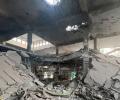
Under Mission Sudarshan Chakra, the country's national security shield is to be expanded by 2035 to ensure comprehensive protection of both strategic and civilian critical infrastructure.

The Reserve Bank of India (RBI) has announced a record surplus transfer of Rs 2.87 trillion to the central government for FY26, driven by increased income and an expanded balance sheet, despite a reduction in the contingent risk buffer (CRB) to 6.5 per cent.

The Centre has announced that the Viksit Bharat -- Guarantee for Rozgar and Ajeevika Mission (Gramin) Act will come into force across the country from July 1, replacing the Mahatma Gandhi National Rural Employment Guarantee Act.

In absolute terms, the fiscal deficit, or gap between expenditure and revenue receipts, stood at over Rs 5.07 lakh crore (Rs 5.07 trillion) at the end of February, according to the data released by Controller General of Accounts on Thursday.

The fiscal deficit situation during April-May of the last fiscal was 37.5 per cent of the Budget estimates.

Amidst a disappointing box office weekend for several new Hindi releases, Vikram Bhatt's Haunted 3D: Ghosts Of The Past has emerged as a surprising success.

The idea of back-loading the target of fiscal consolidation is perhaps guided by the government's desire to be prepared for any adverse developments in the coming year, points out A K Bhattacharya.

In 2025-26, the government allocated Rs 6,81,210 crore for defence budget.

Despite zero publicity, mythological film Krishnavataram has shown a surprising fight at the box office, while family drama Daadi Ki Shaadi struggled to find an audience.

A new white paper released by the Tamilaga Vettri Kazhagam (TVK) government reveals that Tamil Nadu's direct debt has nearly doubled to an alarming 10 trillion in the past five years, exposing significant fiscal strain and a substantial debt burden on every citizen.

The remarkable rise of smallcaps reflects the emergence of a broad set of specialised businesses operating in industries where the sectoral tailwinds remain considerably stronger than macroeconomic headwinds, points out Debashis Basu.

India's economy experienced a growth of 7.8 per cent during the October-December quarter of 2025-26, according to the new series of national accounts with 2022-23 as the base year.

A parliamentary committee has voiced concerns over ongoing examination irregularities despite government measures, recommending the Ministry of Education publish a time-bound roadmap for reforms. The panel also urged a nationwide blacklist of firms involved in exam processes and suggested utilising the National Testing Agency's financial surplus to enhance its capabilities.

Jefferies has downgraded Indian information technology (IT) companies Infosys, HCLTech, and Mphasis to "hold"; LTI MindTree, Tata Consultancy Services (TCS) and Hexaware to "underperform", citing artificial intelligence (AI)-related concerns. Coforge, Sagility and IKS, however, still remain its top picks.

While presenting the Union Budget to Parliament earlier this month, Finance Minister Nirmalal Sitharaman had raised fiscal deficit target to 3.8 per cent of the GDP from 3.3 per cent pegged earlier for 2019-20 due to revenue shortage.

Here are the key numbers to watch out for in the Union Budget for 2025-26:

Infographics break down the key numbers and decisions, making it quick and easy to understand what the Budget means for the economy.

There is a minimum requirement of Rs 2.5 trillion capital expenditure every year and it is understood at the highest levels of the government.
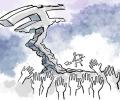
Eighteen of India's 28 states exceeded the fiscal deficit ceiling of 3 per cent of GSDP in FY25, a deterioration comparable to the Covid year of 2020-21, according to the Comptroller and Auditor General (CAG). The report also noted a decline in states reporting a revenue surplus, with Bihar, Mizoram, and Telangana moving into deficit.

The Union Budget for 2026-27, presented by Finance Minister (FM) Nirmala Sitharaman on Sunday, which was a first, had an excellent domestic macro backdrop. According to the first advance estimates, gross domestic product (GDP) in constant prices is projected to grow 7.4 per cent in the current financial year, against 6.5 per cent in 2024-25.

Direct tax realisation, however, is likely to fall short of the enhanced target of Rs 3.87 lakh crore (Rs 3.87 trillion), mentioned in the revised estimate for 2009-10.

Air India expects to wipe out some red marks from its balance sheet.

Though the Centre's fiscal consolidation story is taking a hit, Plan expenditure is likely to provide some respite. In the Budget, expected to be tabled by mid-March, the Plan expenditure is likely to be scaled down in the revised estimates for 2011-12, compared to Budget estimates.

India's fertiliser subsidy bill is projected to increase by approximately 70,000 crore, reaching around 2.41 trillion in FY27, primarily due to rising import costs exacerbated by the ongoing West Asia crisis.
